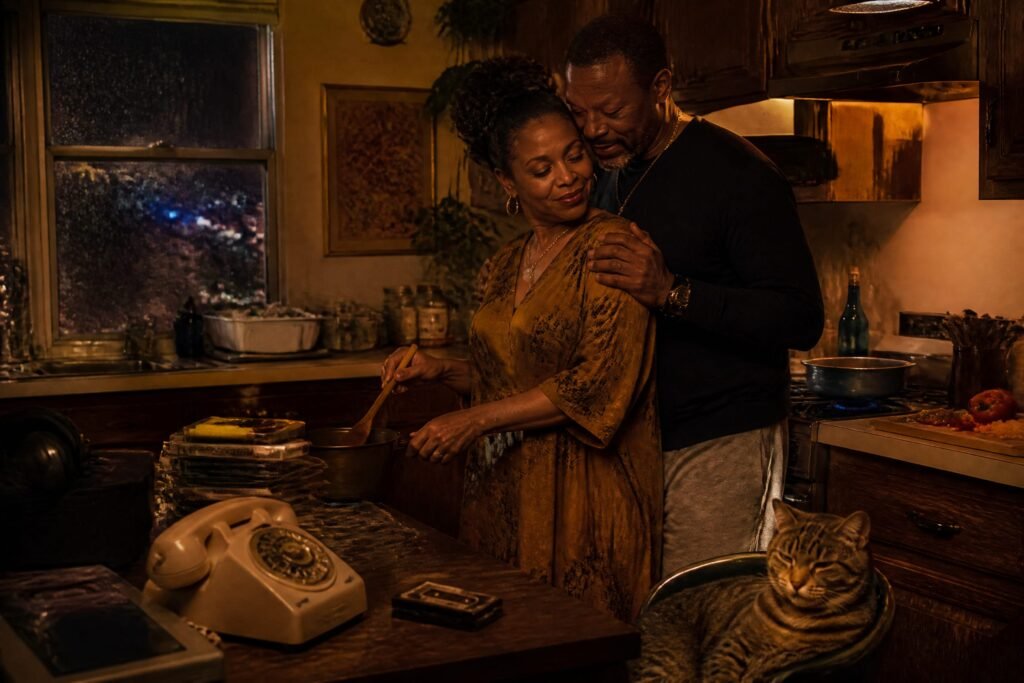
World Telecommunication and Information Society Day celebrates humanity’s ever-growing ability to communicate across distance. From the telegraph to satellites to smartphones, the world has become increasingly connected. Messages that once took weeks or months to arrive can now cross oceans in seconds. For most of my career, I worked in telecommunications, installation, and repair, so the subject hits a little closer to home for me than it might for some people.
I spent years helping people stay connected. Funny thing is, nobody ever calls telecom repair because life is going well emotionally.
The first song that came to mind when I saw this week’s theme was Communication Breakdown by Led Zeppelin. Technically, it didn’t fit the criteria. No telephones. No operators. No lonely voices waiting beside rotary phones. Still, the song felt strangely relevant.
Listening to it now, the frantic energy sounds less like a collapsing relationship and more like modern life itself. Notifications. Endless digital noise. Half-finished conversations happening across multiple screens while people sit in the same room barely acknowledging each other.
Then my mind drifted toward Nobody Home by Pink Floyd, a quieter and far more haunted reflection on isolation. A room full of objects. A television humming softly in the dark. A phone existing mostly as decoration while loneliness settles into the wallpaper.
That song introduced me to feelings of isolation and loneliness I would eventually come to know all too well.
During one stretch of my career, I spent so much time away on assignments that my wife once joked — with more frustration than humor — that our house had become the place I visited.
Looking back, “Nobody Home” makes a lot more sense to me now than it did when I was younger.
Still, as powerful as the song remains, this week’s theme kept pulling me toward something warmer. Less about isolation and more about connection.
So naturally, I asked Guppy.
She yawned, looked vaguely disappointed in my inability to solve my own problems, and demanded treats for emotional support.
Somewhere between bribing the cat and overthinking the assignment, I remembered a conversation I had over the weekend with a group of teenagers who were genuinely interested in learning about music. Not trends. Not algorithms. Music.
We talked artists, albums, atmosphere, and the difference between hearing music and actually listening to it. I suggested artists to all of them based on their individual tastes and interests, which honestly made for one of the more enjoyable conversations I’ve had in quite awhile.
One young man mentioned jazz.
Now that got my attention.
Jazz conversations are rare enough these days that you learn to appreciate them when they happen. We discussed a few artists for him to explore, and somewhere in the middle of that conversation I remembered When Sly Calls by Michael Franks.
And suddenly the theme made sense.
I actually discovered Michael Franks through an Army buddy years ago. We bonded over jazz and circuit boards, which probably tells you everything you need to know about the strange friendships the military sometimes creates. He and I even attended a concert by David Sanborn together once. We were so broke that we only had enough money for one beer.
So we shared it.
Looking back, that might be one of the purest definitions of friendship I can think of.
His mother was the real Michael Franks fan. After returning from leave, he brought back a few Franks cassettes for me to listen to. I was hooked almost immediately. During one particularly difficult deployment, Michael Franks, Elvis Costello, and Concrete Blonde became part of the emotional survival kit.
My wife loved Michael Franks as well. Whenever I returned from various assignments, she would already have the latest CD waiting for me.
I once asked her what she thought about Concrete Blonde and Elvis Costello.
She rolled her eyes, walked over to the stereo, and put on Ahmad Jamal instead. Then she handed me a brand-new pair of studio headphones so I could listen to “the other stuff” without driving her completely insane.
To be fair, she also introduced me to White Zombie and Pearl Jam, which still feels slightly surreal in hindsight.
Apparently human beings are complicated playlists.
“When Sly Calls” was recorded in 1983 and appeared on Passionfruit. According to Spotify, it also happens to be the most-played track on the album, which officially disqualifies it from my usual deep-cut requirements.
Apparently even I break character occasionally.
What really grabs me about “When Sly Calls” is the groove.
Before you even start thinking about lyrics or themes, the track settles into that smooth rhythmic pocket and just stays there. The rhythm section understands restraint. Nothing feels rushed. Nothing fights for dominance. The song glides more than it pushes, and that relaxed confidence is a big reason the track still holds up decades later.
Then the chorus arrives and suddenly you find yourself rocking in your chair quietly mouthing the lyrics before you even realize you’re doing it.
That’s one of Michael Franks’ real strengths. His music doesn’t usually demand attention. It sneaks into the room and slowly takes possession of the atmosphere.
I’ve never really considered Michael Franks a great vocalist in the traditional sense. His voice was never the thing that grabbed me.
The delivery did.
The atmosphere.
The phrasing.
The conversational rhythm quietly woven through his songs.
Franks understood something many technically gifted singers never quite grasp: not every song needs to overpower the listener. Sometimes a song works better when it feels like a conversation already in progress.
Lyrically, “When Sly Calls” succeeds because it refuses to overexplain itself. The song leaves room for interpretation. Who exactly is Sly? Why does the call matter? Why does the emotional atmosphere subtly shift once the phone rings?
Franks trusts implication.
And honestly, the song is less about telephones than interruption.
Someone enters emotional space remotely.
That’s part of what made telecommunications revolutionary in the first place. Before telephones, absence was more absolute. Once phones arrived, distance could suddenly speak.
I honestly don’t know how many times my wife and I cooked dinner dancing around the kitchen to this song.
We all know the real secret to good cooking is jazz, not screaming at your staff like you’re auditioning for a reality show meltdown compilation.
I look over at Guppy now and she has her eyes closed, swaying ever so slightly.
Just slightly.
She’s far too cool to fully commit to the groove.
“When Sly Calls” was one of the songs my wife and I both loved. Years later she admitted the track reminded her of waiting for me to call and tell her I was okay during deployments.
That changed the song for me.
Suddenly the smoothness underneath the music carried tension I hadn’t fully noticed before. The waiting. The relief.
Not content.
Presence.
The older I get, the more I appreciate music that understands how to live alongside people instead of constantly trying to overwhelm them. “When Sly Calls” feels lived-in that way. Comfortable. Warm. Human.
Maybe that’s why the song still resonates with me after all these years.
Not because it’s flashy.
Not because it demands attention.
But because somewhere inside that groove is the simple comfort of hearing the right voice at the right moment and realizing the distance between two people has briefly disappeared.
Author’s Note:
Thank you to Jim Adams for continuing Song Lyric Sunday and giving all of us a place to share music, memories, and reflections. It felt genuinely good to write about music again. Somewhere along the way, life gets noisy and you forget how much certain songs helped carry you through different versions of yourself.